News and information from the New Orleans area
Mardi Gras Parade
CITY TO REMOVE PORTABLE TOILETS FROM NEUTRAL GROUNDS!!!
016 years
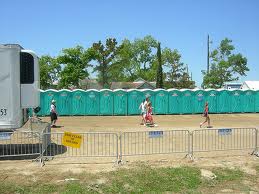
jazz fest port o lets
Saw the mayor, police chief, etc. talking on TV tonight about the removal of all port-0-lets from the neutral grounds that are around the St. Charles Avenue, Napoleon Avenue, and Canal Street for Endymion.
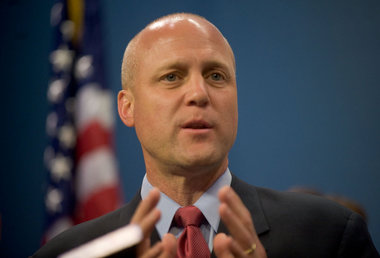
Mayor Mitch Landrieu
This is no new tradition. Many of the families around the parade routes have been paying for their own Port-o-Potties for decades!! Whole families and groups depend for decades on this relatively unobtrusive, since they appear and vanish within 10 or less days without fail.
I do not think the Mayor or Police Chief are using the right logic in carrying out this decision without any public opinion sought. I wouldn’t be surprised if the City Council revisits this ban very quickly.

Orleans Police Chief Ronal Serpas
What’s the deal here? Has the city been paying for the Port -o- Lets on the neutral grounds? The answer is NO NO NO!! So what is really behind this decision?
OTHER OPTIONS FOR BATHROOMS ON THE NEUTRAL GROUNDS ON NEW ORLEANS DURING PARADE TIME
Right Aid at St. Charles and Louisiana Avenues have a dozen port-0-lots available. They are free for cutomers, and $2 for everyone else, and the money aids the New Orleans Musicians Clinic!
My group usually hang out on Napoleon Avenue around Coliseum Street. Sophie Gumbel School offers clean bathrooms very cheaply. The fees benefit the school. $5. per day per person as many times as you like. $2. for single usage. A great deal!!
Mardi Gras Music Series: EARL KING
016 years
I’ve been a big fan of Earl King since moving to New Orleans in the middle 1970’s. I remember seeing Earl at the Jazz Fest in the late 1970’s. He was a true R&B powerhouse. I purchased a copy of the Trick Bag album, it was 1 of the top 5 New Orleans R & B tunes for me, along with Tell It Like It Is, Go To The Mardi Gras, Cha Dookie-Doo, and Mardi Gras Mambo.
Unilaterally respected around his Crescent City birthplace as both a performer and a songwriter, guitarist Earl King was a leading New Orleans R&B force for more than 4 decades.
Mardi Gras tune- Street Parade by Earl King
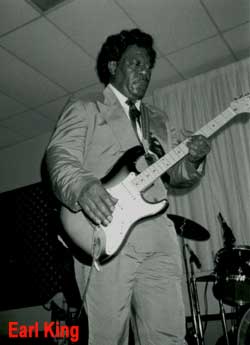
Earl King
Born Earl Johnson, the youngster considered the catalogs of Texas guitarists T-Bone Walker and Gatemouth Brown almost as fascinating as the live performances of local luminaries Smiley Lewis and Tuts Washington. King met his major influence and mentor, Guitar Slim, at the Club Tiajuana, one of King’s favorite haunts (along with the Dew Drop, of course). The two instantly became friends. Still performing under the name Earl Johnson, the guitarist debuted on wax in 1953 on Savoy with “Have You Gone Crazy.” On this record, longtime pal Huey “Piano” Smith made the first of his many memorable supporting appearances.
In the world of the Blues the name of “King” is highly respected. Most fans associate the surname with the obvious “Big 3,” Albert, B.B. and Freddie. But in New Orleans, the residents know there is a 4th that deserves his place alongside these 3: Earl King.
Earl King was more than just a musician. He was a renaissance man. During his nearly 5 decade career, he wore many hats: guitarist, vocalist, songwriter, producer, sideman, arranger and mentor. He was prolific in his output, perhaps only rivaled by Allen Toussaint for recognizable material. His songs have been covered by the likes of Fats Domino, Jimi Hendrix, Stevie Ray Vaughan, The Meters, Johnny Adams, Professor Longhair and many more. And unlike many other artists of his generation, he profited from the royalties gained by those who covered his songs as he had wisely retained the copyrights to his work.
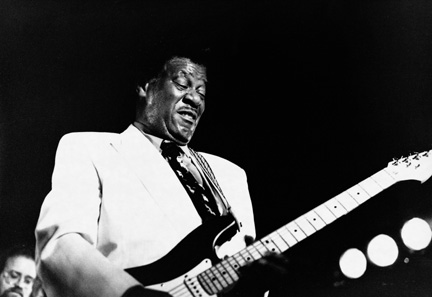
Earl King
He was born in New Orleans as Earl Silas Johnson on February 6, 1934. Raised in the city’s Irish Channel neighborhood, his father was a Blues pianist who was a close acquaintance with the locally renowned Tuts Washington. But Earl’s father died when he was still quite young and he was raised in a single-parent home by his mother, a heavy-set woman known affectionately as “Big Chief.”
Earl’s musical life began in the family church. He participated in the choir singing Gospel. But one day while walking through the neighborhood he heard the guitar playing of Smiley Lewis emanating from a bar. The music enchanted him and he sought means to express his singing outside of the church.
Pianist Huey Smith heard the teenager sing and decided to hire him for his band. Needing another vocalist and musician, he convinced Earl to pick up the guitar.
Johnson became Earl King upon signing with Specialty the next year. Label head Art Rupe intended to name him King Earl, but the typesetter accidentally reversed the names. A Mother’s Love, King’s first Specialty offering, was an especially accurate Guitar Slim homage produced by Johnny Vincent, who would soon launch his own label, Ace Records, with King one of his principal artists. King’s first Ace single, the seminal two-chord south Louisiana blues Those Lonely, Lonely Nights, proved a national R&B hit (despite a sound-alike cover by Johnny “Guitar” Watson). Smith’s rolling piano undoubtedly helped make the track a hit.
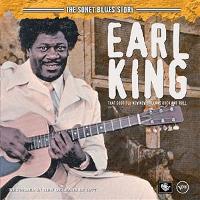
Earl King Trick Bag Album Scandinavian version
I notice this Trick Bag album is on the Sonet label, that’s a Scandinavian label, I knew the owners, and did business with the Storyville label for many years. It was sold to Polygram and for a decade they buried the label.
King remained with Ace throughout the rest of the decade, recording an unbroken string of great New Orleans R&B sides with the unparalleled house band at Cosimo’s studio. He later moved to Imperial to work with producer Dave Bartholomew in 1960, cutting the classic Come On (also known as Let The Good Times Roll) and 1961’s humorous Trick Bag. He managed a second chart item in 1962 with Always a First Time. King wrote standout tunes for Fats Domino, Professor Longhair, and Lee Dorsey during the 1960s.
Although a potential 1963 pact with Motown was scuttled at the last moment, King admirably rode out the rough spots during the late ’60s and ’70s. In the 1990s, he rejuvenated his career by signing with Black Top; Sexual Telepathy and Hard River to Cross were both superlative albums.After releasing well over 100 albums, the label folded in 1999. Nauman Scott died in 2002. Hammond Scott sold the rights of the catalog, and some releases were reissued on labels such as Varèse Sarabande, Fuel 2000 and Shout! Factory. In 2006, P-Vine Records in Japan acquired the worldwide rights to them, and has reissued a few of the CD’s from the catalog.
In 2001, King was hospitalized for an illness during a tour to New Zealand, however, that did not stop him from performing. In December of the same year, he toured Japan, and he continued to perform off and on locally in New Orleans until his death.
He died on April 17, 2003, from diabetes related complications, just a week before the New Orleans Jazz & Heritage Festival. His funeral was held during the Festival period on April 30, and many musicians including Dr. John, Leo Nocentelli and Aaron Neville were in attendance.[4] His Imperial recordings, which have been long out-of-print, were reissued on CD soon after he died. The June 2003 issue of a local music magazine OffBeat paid a tribute to King by doing a series of special articles on him.
Hollywood Heartthrob Andy Garcia to Reign as Bacchus XLIII For Mardi Gras 2011
016 years
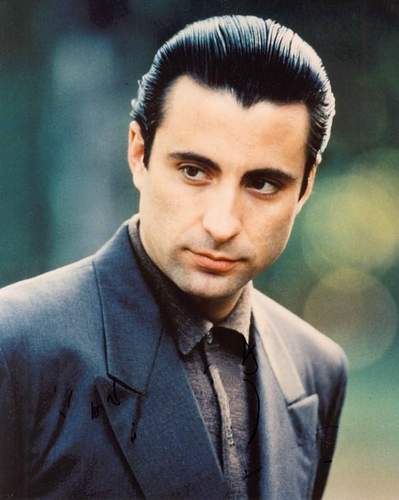
Andy Garcia Bacchus 2011
Actor Andy Garcia will reign as Bacchus XLIII when the krewe rolls March 6 as part of the Mardi Gras 2011 celebration.
“His fame and his personality will assure that he is a great Bacchus King who helps make the 2011 Mardi Gras stupendous, highly successful and memorable,” said said Owen Brennan III, executive director of the Krewe of Bacchus.
Garcia was nominated for both an Oscar and a Golden Globe award for his role in “The Godfather III” in 1990. He was also nominated for several awards for his portrayal of casino owner Terry Benedict in “Oceans 11.”
The theme of the 2011 Bacchus parade will be a salute to the World War II generation, known as “the Greatest Generation.” Blaine Kern float makers have worked closely with staff members at the World War II Museum to assure that all references to World War II and U.S. armed forces are authentic
New Mardi Gras App Will Help Monitor Parades
016 years
History repeats itself every Mardi Gras. Thousands of tourists and locals will wake up at the crack of dawn and head out to the neutral grounds and sidewalks around Jackson and St. Charles Avenues with hopes of snagging a Zulu coconut. Then, they’ll wait. And wait. And wait.

Highly sought after Zulu Coconut & Muses Shoe
They’ll wonder if they read the parade schedule wrong, walk into the middle of the street to see if anything is coming, and then it will hit them like a double-decker float: Zulu always runs late (exception: 2010)
But this year, smart phone owners will be able to sleep in. Even though they could be miles away from the parade, thanks to a new app with a built-in parade tracker, they’ll be in the know.
The parade tracker relies on devices placed on the head and tail floats of select parades, said Rob Hudak, the interactive creative director at Zehnder Communication Inc., the New Orleans company that created the app in partnership with television station WWL.
The free app, called Experience Mardi Gras, is in its early stages but still will allow parade-goers and those hoping to avoid parade traffic to track up to one parade every day starting with Muses on March 3 and ending with Zulu on Fat Tuesday. The app also features a post-parade events section and live streaming video of select parades.
That means only the last half the parade season is covered by this app, which isn’t very good.

EMG screen shot
“This is version 1.0, and we hope it grows into a more robust app experience,” Hudak said. “We’re talking about adding social and augmented reality components. Something almost like an extension of the Mardi Gras experience.”
There are a handful of apps connected with Carnival, but Zehnder and WWL’s app actually provides real-time tracking of Carnival parades, without relying on user-generated reports.
WDSU-TV has a parade tracker program that originate from a person riding in a car at the front of most parades. The human reports are converted to text messages which are sent to participating phones. This program is free. Arthur Hardy’s Mardi Gras Guide has a program that basically is his magazine on your smart phone. He charges 4.99, same as his magazine, I think. There are a number of free phone Mardi Gras theme wallpapers available.
Production of the app began in December and comes on the heels of a successful Voodoo Experience music festival app that the agency launched in October. Augmented reality was heavily utilized in that app.
With the Voodoo Experience app, concert-goers could point their smart phone cameras at a band and the app would tell them who was currently on stage. It would also give them information about the band and who was playing next.
By panning the camera around the premises, users could see where they could go to the bathroom or where they could get their next beer. By pointing it at a vendor, users could look at the menu items available at that concession stand.
Hudak envisions using the same concept for the Experience Mardi Gras app by 2012.
“An idea we’re throwing around is doing virtual throws, so that when you point your phone at a float, it’ll have a button that you can press to get a throw, which could be a coupon to a sponsor,” he said.
Sponsors currently include Zatarain’s and Tabasco, but Hudak expects to add restaurants and bars on the parade route in future versions of the app.
I attempted to find this program with my HTC Hero smart phone, and my market search engine (google!) couldn’t find any Experience Mardi Gras app. When I used my phone bar code scanner program to scan the QR code provided, my phone recognized the code but was unable to find the web site. Then I went to the web site the article linked to, and clicked the download link. The site indicated the download had started, but I never received the app.
I’m not sure releasing the app in time for Carnival 2011 with this many bugs was a wise move. Time will tell.
From the Appbrain.com web site-
Experience Mardi Gras is an app like no other. You can follow your favorite Mardi Gras parades as they’re happening! Find out schedules, routes, events, and more with this one-of-a-kind interactive, mobile application.
It’s the only app to offer the PARADE TRACKER feature, so you can follow the parade as it makes its way to your exact location. While the app follows the biggest krewes as they make their way down New Orleans’ historic streets, you’ll be the first to know when the parade is over so you can beat the crowd to the next event – no more guessing about when it’s going to end or if the parade has broken down.
This app uses Google Maps to give you the most accurate parade routes, helps you navigate the city and lets you know exactly when and where to be for the best parades.
And while you’re waiting on each parade to reach your location, the app features authentic and entertaining videos of this year’s Mardi Gras as well as years past. Learn some fun facts about storied carnival traditions from the unique personalities that make this New Orleans’ favorite season while receiving up-to-date information on route changes, dates, and times for Mardi Gras 2011!
After the parades, use the EVENTS page to plan your evening out. Find out where all the action in the city is happening and where your favorite band is playing.
Download the best guide to everything you need to make the most of your Mardi Gras Experience in a single spot!
FEATURES:
– PARADE TRACKER (see where you are in relation to the beginning and end of the parade route)
– Complete parade schedule and start times (Date/Time, Location)
– Google Map of all parade routes
– Authentic video content featuring current content from WWL TV
– Up to the minute listings of events, music, and happenings around town
Recent changes:
-Added start and end markers to parade maps.
Latest version: 1.05 (for all Android versions)
Mardi Gras Indians Seek Copyright Protection For Their Suits
016 years
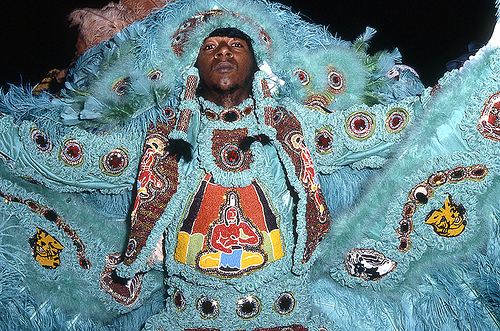
Chief Howard Miller, Creole Wild West
I’ve met Creole Wild West Chief Howard Miller through my client and good friend, musician June Victory. Chief Howard is a very nice, talented guy who deserves all he can achieve through his art as a Mardi Gras Indian Chief.
Recently he’s filed an online copyright application for his brand new Indian costume in the hopes of collecting some of the income derived from photos, posters, T-Shirts, videos and movies of his costume.
Chief Howard Miller knows cameras will start clicking next month when his Creole Wild West Mardi Gras Indians take to the streets with their elaborately beaded and feathered costumes.
“It’s not about people taking pictures for themselves, but a lot of times people take pictures and sell them,” Miller said.
Intellectual property law dating back to the nation’s founding dictates that apparel and costumes cannot be copyrighted, but Tulane University adjunct law professor Ashlye Keaton has found a way around that by classifying them as something else.
“Their suits and crowns, their regalia, are certainly unique works of art,” Keaton said. “They are entitled to protect that art work.”
Keaton got to know many of the Indians through another Tulane program, the Entertainment Law Legal Assistance Project.
She was intrigued by their art, more so after she saw photos sold at the New Orleans Jazz and Heritage Festival and at local galleries, apparently without their permission. Pictures of the Indians sell online for up to $500 each, and books and T-shirts are also available.
Now they and members of the city’s other tribes are working to get a slice of the profits when photos of the towering outfits they have spent the year crafting end up in books and on posters and T-shirts.
Once the costumes are copyrighted, which can be done online for $40, the Indians can either sue people who sell photos of them or try to negotiate licensing fees with photographers either before or after the pictures are taken.
“It’s not about people taking pictures for themselves, but a lot of times people take pictures and sell them,” Miller said.
“For years people have been reaping the benefits from the pictures they take of the Mardi Gras Indians.”
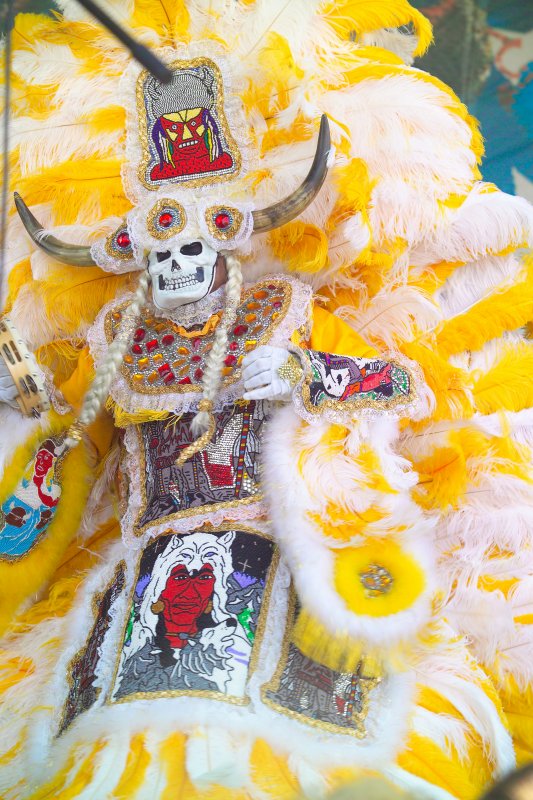
Creole Wild West
Intellectual property law dating back to the nation’s founding dictates that apparel and costumes cannot be copyrighted, but Tulane University adjunct law professor Ashlye Keaton has found a way around that by classifying them as something else- as works of art.
The first test for the Indians who have copyrighted the new costumes they will wear this year will come at Mardi Gras. The Indians revamp or completely remake their suits every year, and the copyright takes effect at the first public showing, said Ryan Vacca, an assistant professor of law at the University of Akron School of Law.
Once the costumes are copyrighted, which can be done online for $40, the Indians can either sue people who sell photos of them or try to negotiate licensing fees with photographers either before or after the pictures are taken.
“They would be in a good position to negotiate a flat fee or percentage of the sale, something like that,” said Vacca said.
The Mardi Gras Indians have a long and colorful history in New Orleans. Since the end of the 19th century, black men have been making their own version of Indian dress and banding together for informal street parading at Mardi Gras. Local lore holds the tradition sprouted from runaway slaves’ admiration for Native Americans who harbored them from slave hunters before the Civil War.
Mostly the Mardi Gras Indians come from working-class neighborhoods, so their costume investment can take up much of their disposable income.
There is no accurate count of the groups, but about 35 are believed active, many with colorful names such as the Wild Tchoupitoulas, Black Seminoles, Golden Arrows, Wild Magnolias, Fi-Yi-Yi, 7th Ward Hard Head Hunters Golden Blades and Creole Osceola. Each is led by a chief.
Each Indian makes a new suit every year, and over the decades they have become much more glitzy and elaborate. Some cost thousands of dollars.
“It takes the whole year to get ready for Mardi Gras,” Miller said. “I can’t tell you how many hours I put in.”
Miller copyrighted his costume at Keaton’s urging, but it’s unclear how many other Mardi Gras Indians have, since the process has only recently been available online and tracking the old applications is difficult. Miller said he expects many more Indians to copyright their work now that several have done it and can provide help.
He hopes having the copyright will be enough and he will be able to negotiate with photographers and others using his image, rather than sue.
“This is art, what we do,” Miller said. “These suits cost thousands of dollars and all we want is a little bit of what other people make from them.”